
Keyless Defense
Safety first
Understanding Keyless Entry Theft
Keyless entry has made vehicles more convenient, but it has also introduced new security risks. Across South Africa, many vehicle owners are becoming more aware of methods such as signal relay attacks, signal jamming, and key cloning. This page explains how these risks work, what drivers should watch out for, and how proper key fob storage can help reduce exposure to signal relay attacks.
Three attack areas
Signal Relay Attack
Two signal relay devices are used to capture and amplify the weak radio signal constantly emitted by a keyless car fob, tricking the targeted car into unlocking and starting.
Signal Jamming
Criminals use a radio frequency blocker to prevent your car from receiving the lock command from your key fob, preventing your car doors from locking when you press the button, allowing easy access for theft.
Key Cloning
This involves capturing the key fob's unique digital rolling code and programming it onto a blank key, creating a perfect duplicate key that grants full access to the vehicle.
Relay AttaCK
How Signal Relay Attack Works
Signal capture
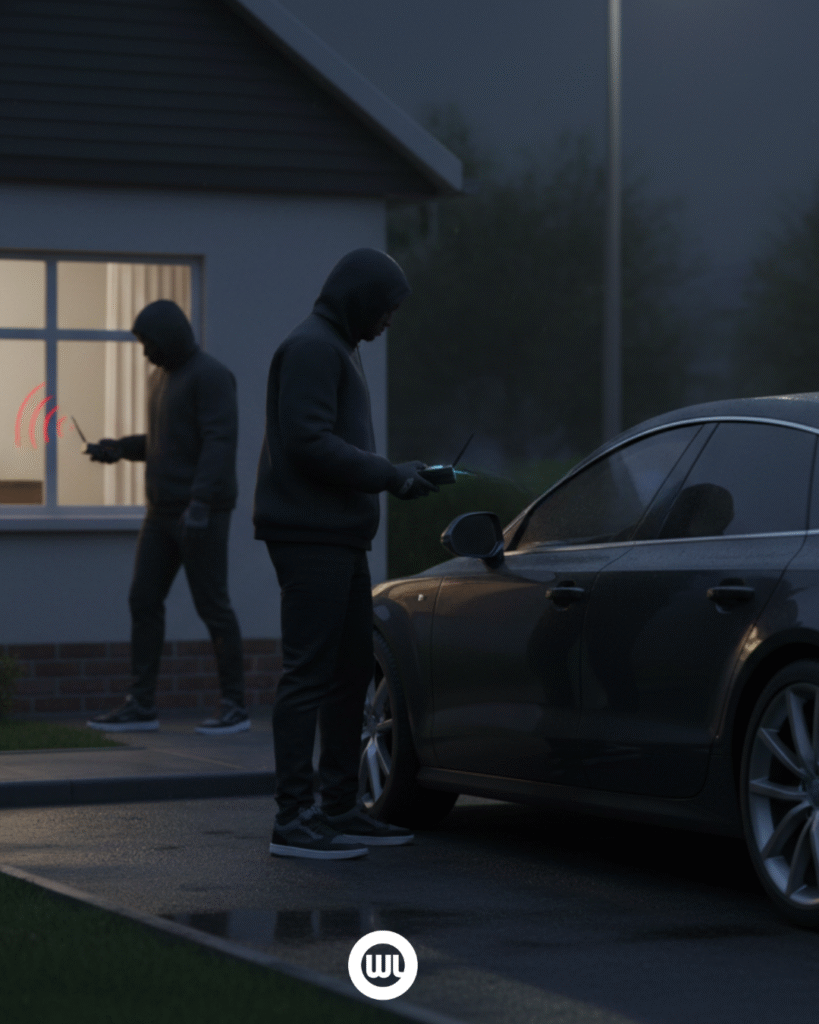
Attackers use a device near your key fob (inside your home or bag) to pick up the fob’s low-power radio signal.
Signal relay
A second device near the car receives that captured signal and forwards it to the vehicle, effectively extending the fob’s range.
Proximity spoofing
The car receives the relayed signal and believes the genuine key is within range, so it unlocks and allows engine start.
Signal security
Faraday protection is only as good as its seal and the lifespan of its shielding.
The effectiveness of any Faraday enclosure is only as good as its seal and the lifespan of its shielding. Radio waves can escape through the smallest tear or gap created by daily stress. Our solution addresses this fundamental principle. Fortress’ rigid structure is engineered to be a permanent, crush-proof barrier, ensuring the conductive lining remains intact and the signal-blocking seal is always absolute. This is the difference between temporary prevention and permanent protection.
This is the difference between temporary prevention and permanent protection.
Essential Key Fob Security Tips
-
Distance is Defense
Store your key fob as far away from the exterior walls, windows, and the front door of your house as possible. Even 5 to 10 meters can make a difference.
-
Always Double-Check
After pressing the lock button, always manually check the door handles on your vehicle to ensure a signal jamming attack hasn't occurred.
-
Silence the Signal
If your key fob allows it, learn the manufacturer's procedure to temporarily deactivate or put the key to "sleep" or use a Faraday product like Fortress.
-
The Pocket Problem
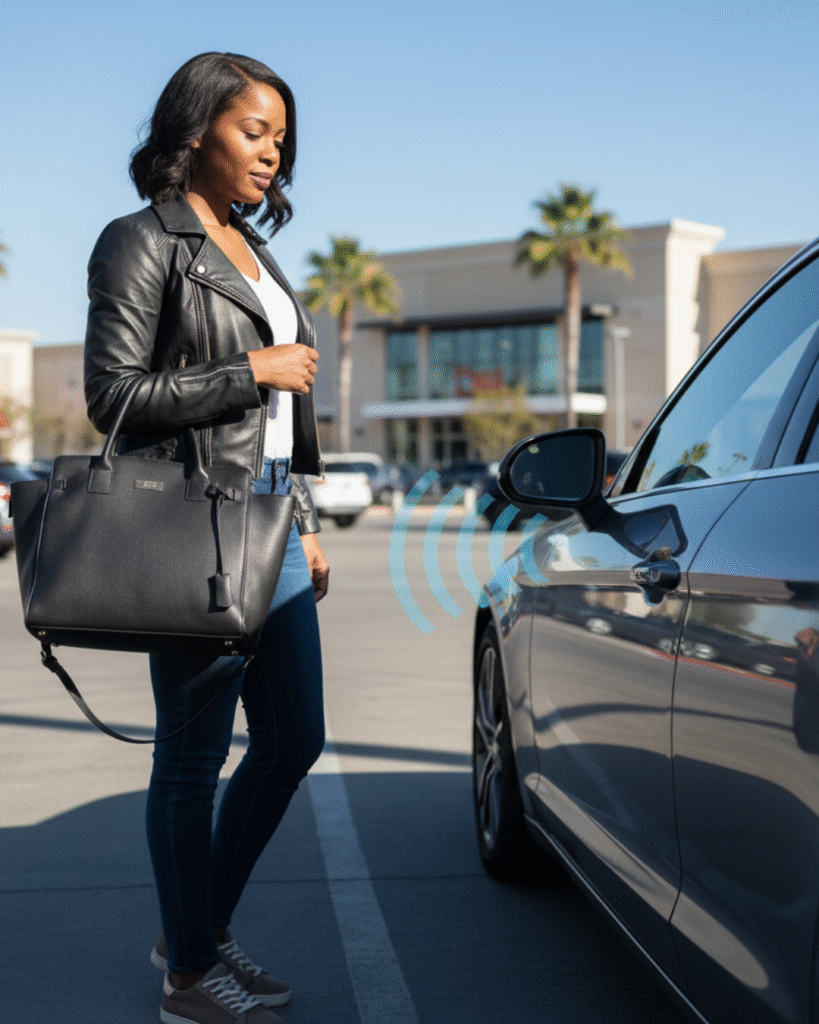
Be aware that thieves can use relay devices in busy areas (malls, parking lots) to scan your fob while it's in your pocket or handbag. Never leave a key fob unprotected in public.
-
Be Aware of Strangers
Be suspicious of people lingering unnecessarily close to you or your parked car they may be the first person in a two-person relay attack team.
-
Test Your Gear
Always test any Faraday product you purchase, place your key inside and try to unlock the car door while holding the sealed enclosure next to the door. If it unlocks, the product has failed. (This subtly encourages testing and highlights the confidence in your certified solution).
Helpful Insights
A Relay Attack is a sophisticated, non-violent car theft method where criminals use two simple electronic devices to capture and amplify the weak radio frequency (RF) signal constantly emitted by your keyless fob. This signal is then "relayed" to the vehicle, tricking the car into thinking the key is nearby, allowing thieves to unlock the doors and drive away in seconds.
The thieves work in a pair: one stands near your car with a signal amplifier, and the accomplice stands near your key fob (often placed near a door or window inside your home). The devices bridge the distance, effectively extending your key's range by hundreds of meters.
Absolutely. Keyless car theft has surged in recent years, especially in high-volume regions like Gauteng and KwaZulu-Natal. Security experts and insurance firms confirm that Relay Attacks are a primary cause of the rising theft rates for high-value keyless entry vehicles.
Any vehicle with a Passive Keyless Entry (PKE) or Smart Key system that allows you to unlock and start the car without physically pressing a button on the fob is vulnerable, regardless of the brand (including high-end SUVs and luxury models).
Signal jamming is a separate, low-tech crime where thieves use a radio frequency blocker to prevent the "lock" signal from your fob from reaching your car. They then steal the car after you walk away, thinking you locked it successfully. A Faraday box helps prevent this by ensuring your fob is secured before you leave the vehicle's vicinity.
Key cloning involves capturing your fob's unique digital codes (rolling codes) and programming a blank key with that data, creating a functional duplicate. A Relay Attack is often the first step in the key cloning process.
A Faraday pouch or enclosure (often called a Faraday cage or box) is a container named after physicist Michael Faraday, who discovered the principle of electromagnetic shielding. By surrounding an object with a layer of conductive material (like metal mesh or specialized fabric), the enclosure redirects external electromagnetic fields and radio frequency (RF) signals, preventing them from penetrating the interior. This simple principle is why a car key placed inside a quality Faraday box is completely isolated and cannot communicate with the vehicle.
Our product Fortress is built with a rigid composite material outer shell, which acts as a permanent, non-degrading chassis. This structural integrity insulates and protects the high-grade internal RF shielding from crushing, warping, and everyday wear, ensuring a complete signal shielding for the long term.
The Fortress system is designed to provide high Decibel (dB) attenuation, effectively blocking all relevant RF, Wi-Fi, Bluetooth, GPS, and critical automotive UHF frequencies that enable relay attacks.